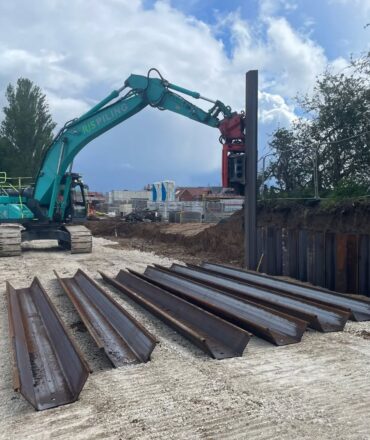
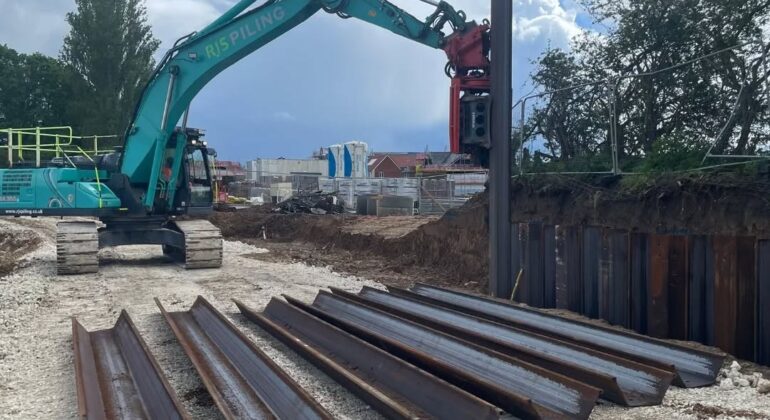

Sheet piling is a go‑to method for creating strong, durable retaining walls in both temporary and permanent works. Whether you’re stabilising ground for a new development or protecting infrastructure from water ingress, sheet piles offer a reliable, cost‑effective solution. But like any engineering method, they come with advantages and limitations.
This guide breaks down the pros and cons of sheet piling, helping clients understand when it’s the ideal choice — and when alternative piling methods may be more suitable.
👍 Pros of Sheet Piling
- High Strength & Durability — Steel sheet piles provide exceptional structural integrity, making them suitable for deep excavations, basements, cofferdams, and marine environments. Their interlocking design ensures stability even under heavy lateral loads.
- Fast Installation — Modern vibratory and impact hammers allow for rapid installation, reducing project timelines and minimising disruption on busy construction sites.
- Versatility Across Soil Types — Sheet piles perform well in a wide range of ground conditions, including soft clays, sands, and mixed soils. This makes them a flexible option for many UK projects.
- Reusability & Sustainability — Steel piles can often be extracted and reused, lowering long‑term costs and reducing environmental impact — a major advantage for temporary works.
- Excellent Water Retention — When installed correctly, sheet piles create an effective barrier against water ingress, ideal for riverbanks, canals, and flood‑prone areas.
👎 Cons of Sheet Piling
- Noise & Vibration During Installation — Impact or vibratory driving can cause disturbance, especially in urban or sensitive environments. Restrictions may apply depending on local regulations.
- Limited Performance in Hard Ground — Dense gravel, boulders, or very hard strata can make installation difficult or impossible without pre‑augering or alternative methods.
- Potential for Leakage — While sheet piles offer strong water resistance, they are not fully watertight. Additional sealing may be required for high‑pressure or critical applications.
- Higher Material Costs — Steel sheet piles can be more expensive than some alternatives, though this is often offset by speed of installation and reusability.
- Aesthetic Limitations — Exposed sheet piles may not be visually appealing for certain developments unless cladding or finishing is applied.
Sheet piling remains one of the most efficient and adaptable retaining methods available — and with RJS Piling’s expertise, clients can be confident they’re getting a solution that balances speed, strength, and long‑term value.